If you came here wondering, “What is mindfulness in simple terms?” or “How do I practice mindfulness at work?” You’re in the right place. Below is a fast, 90-second routine you can run that combines two core ACT skills: defusion (unhooking from thoughts) and acceptance (making room for feelings), so you can handle real office moments: toxic coworkers, validation cravings, anger, “automatic pilot” days, and general anxiety.[1][2]
Why these two?
Brief defusion exercises reliably reduce how believable and emotionally sticky a negative thought feels [3]
What “being mindful at work” really means (ACT version)
Defusion: treat thoughts as words/images, not commands.
Example: your brain mutters, “If this draft isn’t perfect, I’m toast.” Mindfulness training here means seeing that sentence as a sentence; so you can still ship a useful version [1][2]
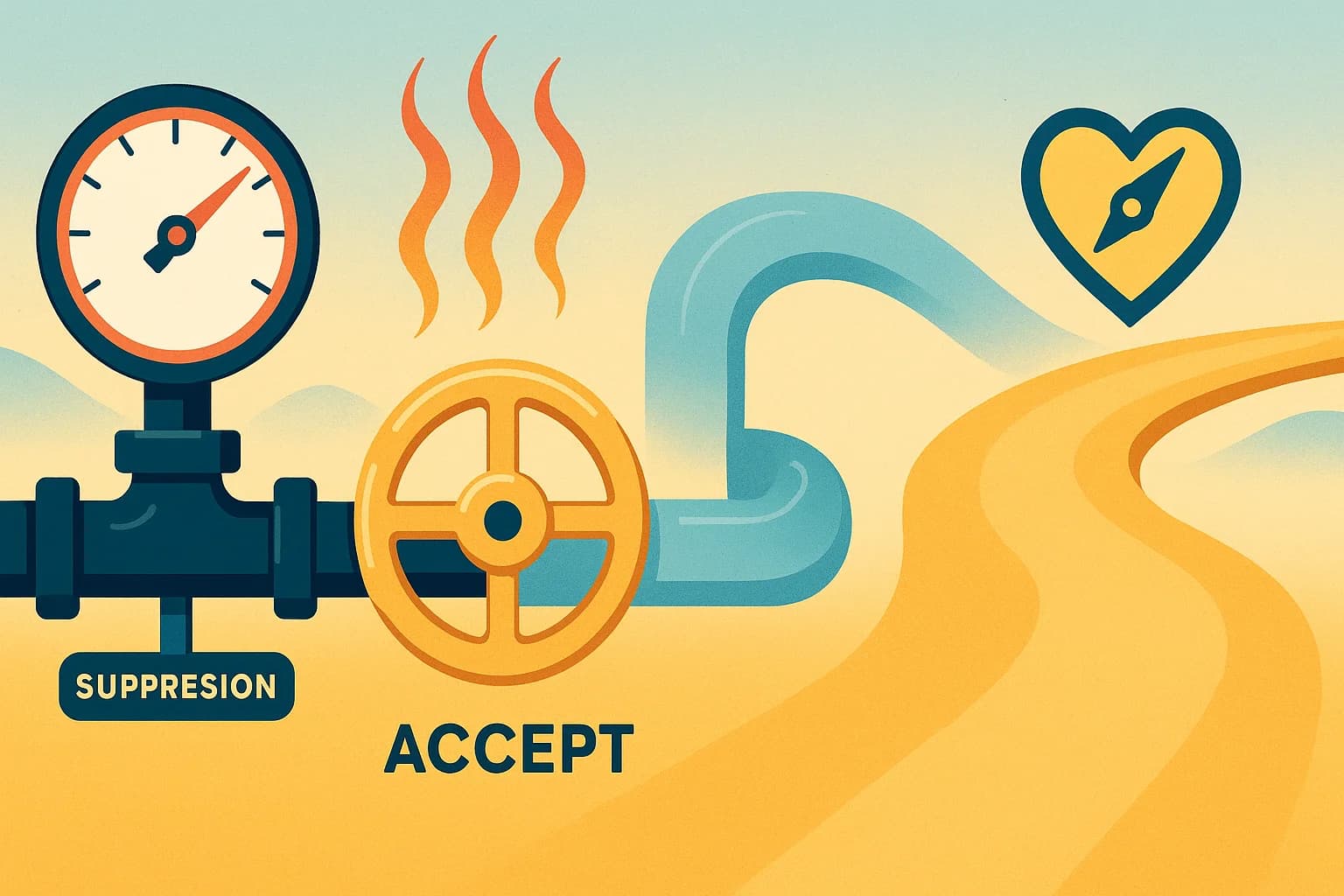
Acceptance: make room for uncomfortable sensations (tension, heat, jitters) without letting them run your next action. Acceptance isn’t resignation, it’s what frees your hands to do what matters while feelings are present (tied to flexibility processes highlighted in reviews [5]
Mindfulness at work isn’t calm-on-demand; it’s freedom under noise.
The 90-Second Starter:
Notice → Name → Open → Act
Run this before replying to a spicy message, when “I’m not good enough” flares, or when the day feels automatic.
1Notice (5–10s)
Catch what’s actually happening: a sentence in your head, a jump in your pulse, a clench in your jaw, a cursor blinking.
2Name (defusion, 10–20s)
Give the thought a neutral label, like a file name:
“Perfectionism-script.”
“Anger-headline.”
“Validation-chase.”
Labeling = cognitive defusion + affect labeling (less grip, less alarm)
3Open (acceptance, 10–20s)
Make a little space for whatever feeling is here. Quietly:
“This tightness can sit in the chair with me.”
“Heat in the face is allowed.”
You’re not trying to feel better; you’re stopping the tug-of-war so you can use your hands again (flexibility helps outcomes
4Act (values, ≤60s)
Take one tiny step aligned with who you want to be at work—reliability, clarity, kindness, integrity:
Paste a 10-word opener at the top of the doc.
Send one honest check-in message.
Write one question you’ll ask in the meeting.
Rename the file clearly and move it forward one stage.
That’s it: Notice → Name → Open → Act
Ninety seconds, no timer, no cushion.
Real Situations:
1Toxic coworker (office politics + criticism trap)
Notice: jaw clenched; thought: “Whatever I do, they’ll shred it.”
Name: “Critic-forecast.”
Open: “I can carry this tightness for a minute.”
Act: send a 3-line recap email: done / next / blocker.
Workplace ACT shows benefits for stress and flexibility in office populations [6]
2Anger at the world (powerless → bitter loop)
Notice: hot face, rapid self-talk about unfairness.
Name: “Anger-headline.”
Open: “Heat is allowed; I can type with heat in the room.”
Act: one values move with a tiny locus of control (send an issue summary; schedule a civic call).
3Validation vs. values (people-pleasing spiral)
Notice: urge to rewrite for the fifth time to impress.
Name: “Validation-chase.”
Open: “Anxious fizz can ride shotgun while I ship.”
Act: send a good-enough draft to one reviewer with one clear ask: “Is the recommendation precise?”
4Automatic-pilot day (life is happening to me)
Notice: hour vanished, scroll trance.
Name: “Autopilot-mode.”
Open: “Dullness can hang out while I steer.”
Act: write a one-line log of this minute: “Sunstripe on desk; sent vendor date; shoulders down 5%.”
(Concrete noticing + micro-action is a practical “mindful behavior” you can repeat on busy days.)
5General anxiety at work/school
Notice: chest tight; “What if I crash this project?”
Name: “What-if trailer.”
Open: “Tight chest can be here while I type.”
Act: paste your opener, list 2 unknowns, schedule a 15-minute solve block.
Defusion helps you act under uncertainty; suppression/“stop thinking” tends to backfire via ironic rebound [7]
“Mindfulness training at work”: one-week plan
Mon–Tue: Run Notice → Name → Open → Act once each day on the loudest moment.
Wed–Thu: Add a one-line log after each rep (e.g., “sent draft despite jitters”).
Fri: Review your logs for examples of mindfulness you actually did—behavior, not mood.
Weekend: Teach the sequence to a friend/teammate (teaching cements skills; ACT frames this as building flexibility
FAQ
What is mindfulness at work in simple terms?
Noticing thoughts/feelings as experiences, and taking a values-based step anyway. (See ACT flexibility review.
How do I practice mindfulness at my desk without meditation?
Use Notice → Name (defusion) → Open (acceptance) → Act (values). Even brief defusion drills help [1] [2] [3]
Is this helpful for workplace stress and anxiety?
Yes, ACT in the workplace reduces distress and increases flexibility/well-being in office employees [6]